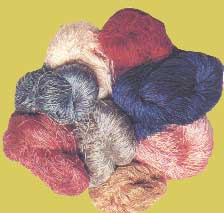
| Floss Silk : Floss silk, or art
silk as it is some times called, is actually mercerised cotton and is used
in certain rugs that are woven in Kayseri. Although not identical to silk,
a somewhat similar look is obtained by mixing cypress tree fibers with
cotton that has been washed in citric acid. Floss silk rugs are woven with
natural cotton warp and weft threads. |
 |
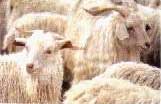
| Sheep Wool : The quality of
wool varies according to the climate, the breed of sheep, and the time of
year of the shearing. Wool from sheep that live in warm and arid regions
is normally dry and brittle, and since it breaks so easly, it ends up
being short and feels lifeless. Good quality wool comes from helthy and
well fed sheep found in cold regions or at high elevations with good
grazing lands and lots of water. In the colder regions, sheep grow a full
fleece to keep warm and their bodies store fat which then translates to a
high lanolin content within the fiber which reaches lengths of 10 cm. and
more. The wool so obtained feels silky smooth and yet springy. Wool from
the higher elevations (cooler also) and from the spring shearing is
considered to be the highest quality. Wool is hand-spun by using primative
utensils called kirmen (drop spindle) and by spinning wheels. Women
usually spin the wool during idle moments and the street while spinning.
In hand-spun wool, the original length of the fiber stays the same through
the spinning process - a fiber tahat measured 7 cm. before spinning will
still measure the same after spinning. Wool can also industrially spun,
but the hard twisting of the fibers by the spinning machines tends to
berak some of the fibers. Although the broken bits and shorter fibers can
be made to adhere together through the use of oils during the spinning
process, the fiber will have lost some of its strength, which, in turn,
will shorten the life spun of the rugs to be woven. |
|
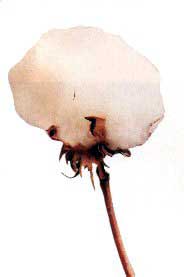
| Cotton : In rug and kilim
weaving, cotton is used mostly for the warp threads, as well as for the
wefts. Compaired to wool, cotton is generally considered to be a more
residant fiber and it is less elastic. So, tighter knots can be tied on
cotton warps as opposed to wool. If very tight knot are tied to a wool
warp, the fiber will break much more frequantly than if the warps were of
cotton. Consequentl, woolen pile rugs with high knoting density counts
will normally have cotton warps, for example, in Hereke, Ladik, and
Kayseri Bunyan carpets. |
 |
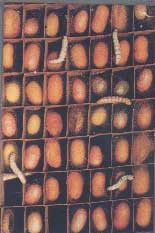
| Pure Silk : The silk used in
Turkish carpet comes from silk cocoons in Bursa. It has a very high
tensile strenght and can be twisted very finely, plus it is guite
resistant. The finest silk comes from the first part of the amazingly long
single thread with witch silk warm spins its cocoons. When unrolled, the
thread from one silk cocoon can stretch up to 25,000 meters. The best and
the finest hand-woven rugs in the wold are Hereke silk rugs. A normal
quality silk Hereke should have 1,000,000 knots per square meter. To day
with tremendous care, attention and density, some exceptional Hereke silk
rugs are woven with 3,240,000 knots per square meter; that is 18 knots
vertically on 1 cm. And 18 knots horizontally on 1 cm. This indicates how
finely the silk can be twisted and woven, as well as how strong and
resisdent this piles can be |
 |